In short
- HomeStars puts an HRV or ERV install in Ottawa at about $1,800–$4,500, depending on home size and ductwork.
- A Canada-wide HomeStars guide puts yearly professional HRV maintenance at $150–$300.
- Natural Resources Canada advises a yearly check by a contractor, with both airflows measured and rebalanced if needed.
- An HRV pulling out more air than it brings in can draw combustion gases back from a furnace or water heater, NRCan warns.
Typical prices in Ottawa
| Job | Typical range | Notes |
|---|---|---|
| HRV or ERV system installed, Ottawa | $1,800–$4,500 | HomeStars Ottawa HVAC page; by home size and ductwork |
| Whole-house HRV installed, mid-sized home with ducts | $2,000–$3,500 | Canada-wide HomeStars guide |
| HRV or ERV unit alone | $700–$2,900 | Canada-wide guide; basic HRV $750–$2,500 |
| Install labour with existing ductwork | $250–$400 | Canada-wide guide, per unit |
| New ductwork for the ventilator | $1,300–$6,600 | Canada-wide guide |
| Yearly professional maintenance | $150–$300 | Canada-wide guide |
Sources. HomeStars, HVAC contractors in Ottawa, cost section, seen 29.10.2026. HomeStars, Heat Recovery Ventilation System Costs, published 30.06.2026, seen 29.10.2026. Operation, balancing and yearly service: Natural Resources Canada, Heat Recovery Ventilators, revised February 2012, seen 29.10.2026. Building Code: O. Reg. 332/12, articles 9.32.1.2 and 9.32.3.11 and O. Reg. 163/24, seen 29.10.2026. Balancer training: HRAI, HRV/ERV Installation and Balancing Fundamentals and HRAI certification locator, seen 29.10.2026. New homes: Tarion, coverage, seen 29.10.2026. Permits: City of Ottawa, projects not requiring building permits, seen 29.10.2026. Contracts: Ontario, guide for home renovation businesses and Ontario, contracts at a consumer’s home, seen 29.10.2026. Climate: Ottawa, Wikipedia, citing Environment and Climate Change Canada 1991–2020 normals, seen 29.10.2026.
What the ventilator in the basement does
Natural Resources Canada describes an HRV as two separate air streams in one box: stale, damp air from kitchens, bathrooms and laundry goes out, and filtered fresh air comes in through a wall hood. A heat-exchange core between them lets the outgoing air warm the incoming air in winter.
Newer houses are built airtight, so they rely on mechanical ventilation. Ontario’s Building Code in force until the end of 2024 required a mechanical ventilation system in every dwelling unit with electrical power.
HRV or ERV for an Ottawa house
Ottawa’s January nights average -14.3°C, and about 16 nights a year drop below -20°C (Environment Canada normals). NRCan says most units start a defrost cycle below -5°C. NRCan lists a frozen core as a reason to call a contractor, who may need to rebalance by raising exhaust flow or lowering supply flow.
An ERV also moves moisture: in winter it keeps some humidity indoors, in a humid July it keeps some out and eases the air conditioner. NRCan adds that dry winter air can come from over-ventilation or an oversized unit. Ask whether a slower setting would help before you price an ERV or a furnace humidifier.
Balancing: the number that matters
A ventilator should bring in as much air as it sends out. NRCan explains why: more air out than in can pull carbon monoxide back from a furnace, water heater or fireplace and draw soil gases through the basement. More air in than out pushes damp air into walls and the attic, where it condenses.
Ontario’s 2012 code set the line for installs under it: the lower flow at least 90% of the higher one unless the maker says otherwise, with start-up following the maker’s balancing procedure. HRAI, the Heating, Refrigeration and Air Conditioning Institute of Canada, certifies HRV/ERV balancers and keeps a public lookup. Ask who balances the unit.
What the yearly service should cover
NRCan lists what a contractor’s annual visit should include:
- Filters, core and fans cleaned or replaced as the maker specifies.
- Condensate drain and pan cleared, with the trap in the line intact.
- Outside hoods and screens clear of leaves, snow and frost.
- Controls and wiring checked, especially parts inside the air streams, and the defrost system tested.
- Airflows measured, written on the unit’s maintenance label, and rebalanced if needed.
NRCan says the contractor should give you a written report; ask first whether it costs extra. Pair it with the yearly furnace service.
New homes and houses you just bought
NRCan suggests more high-speed running in a new house’s first year, while building materials give off moisture. If the house is under two years old, call the builder first and keep Tarion’s year-two warranty in mind.
For a resale house with an HRV, NRCan recommends a service visit with a balance test.
Signs to describe in your request
- Unit dead or breaker tripped. NRCan says to leave the breaker until a contractor finds the cause.
- Weak airflow at the grilles, a frozen core, or a unit stuck on one speed.
- Water on the floor, or wet or iced duct insulation, which NRCan lists as damage to repair.
- Poor air quality or excess moisture throughout the house, which NRCan says can mean the minimum ventilation rate is too low.
Dusty shared ducts are a separate job: duct cleaning.
What moves the price of a new unit
HomeStars puts an Ottawa install at about $1,800–$4,500. The spread comes from:
- Ducts. A unit tied into the furnace’s return duct uses existing runs. Homes with baseboards or hot water heat need ducts of their own, $1,300–$6,600 on the Canada-wide guide.
- HRV or ERV, and the model. Units run $700–$2,900.
- The furnace blower. On furnace ducts it runs at low speed whenever the ventilator does; NRCan recommends an electronically commutated motor.
- Permit. The City’s permit-exempt list names air conditioners and heat pumps, and ventilators are absent from it. Ask the company or call 3-1-1.
In Ontario, home repair work over $50 needs a written agreement, and an estimate can be exceeded by 10% at most unless you sign a change. Ontario also restricts selling air cleaners and HVAC equipment at your door unless you invited the business.
Who handles your request
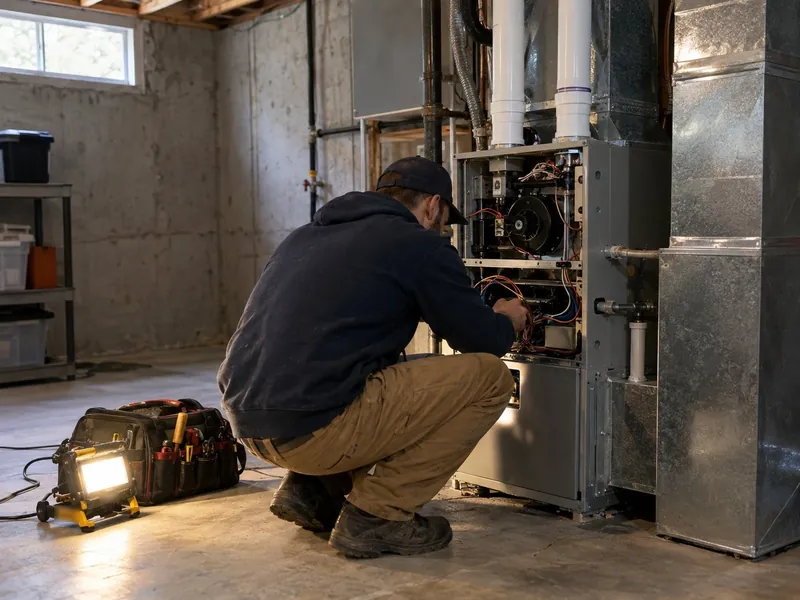
Ottawa Heating Desk passes your request to one independent local company that works on home ventilation. That company calls you back, looks at the unit and does the service, balancing or installation.
Questions to ask the company
- Will you measure the supply and exhaust airflows and write the readings on the unit's label?
- Does the yearly visit cover the core, filters, condensate drain, fans, outside hoods and the defrost test?
- Does anyone on the crew hold HRAI's HRV/ERV balancing certification, and can I look it up?
- Is a written report on the unit's condition included, or is it an extra fee?
- For a new unit: HRV or ERV, which model, which ducts, and what total with HST?
Have this ready for the call
- A photo of the unit's label with make and model, and of the maintenance sticker if there is one
- How the house is heated: forced-air furnace, heat pump, baseboards or a boiler
- The year the house was built, and if you bought it new or recently
- What you notice: frost on windows, dry air, drafts, water under the unit, a blinking light
- Where the two outside hoods are and whether snow or shrubs reach them
Questions people ask
What is the difference between an HRV and an ERV?
Both swap stale indoor air for fresh air and pass heat between the streams. NRCan describes an ERV as a type of HRV that also moves moisture.
How often should a company service it?
NRCan calls for general servicing once a year by a contractor familiar with your unit, and suggests booking the HRV and the furnace on the same visit.
Should it run all the time?
NRCan advises continuous low speed year-round in most homes, with high speed for cooking, showers or a full house.
My house is newly built. Who pays if the ventilator acts up?
Start with the builder. Tarion’s year-two coverage includes the heating delivery and distribution systems and health-and-safety Building Code violations; its seven-year coverage excludes heat recovery ventilators.
Can an HRV supply air for the furnace or clear exhaust fumes?
NRCan says to rely on it for neither. Fuel-burning appliances need their own combustion air, and fumes in the house mean an appliance or vent needs repair at once. See the carbon monoxide guide.