In short
- Since 1 January 2026 the Ontario Fire Code requires a CO alarm on every storey of a home with a fuel-burning appliance, a fireplace or an attached garage, plus one next to each sleeping area.
- Alarm sounding: everyone out, 9-1-1 from outside, and nobody back in until a firefighter or other qualified professional says it is safe.
- A CO alarm does not detect natural gas. For a rotten-egg smell, leave and call Enbridge at 1-866-763-5427 or 911.
- TSSA advises a yearly inspection of every fuel-burning appliance by a TSSA-registered contractor; in Ottawa an inspection and tune-up runs $100–$200 on HomeStars.
Typical prices in Ottawa
| Job | Typical range | Notes |
|---|---|---|
| Furnace inspection and tune-up, Ottawa | $100–$200 | HomeStars Ottawa page |
| Combustion analysis | $100–$150 | Canada-wide guide, when billed on its own |
| Diagnostic or service call | $80–$150 | Canada-wide guide; often credited to the repair |
| Heat exchanger repair or replacement | $500–$1,500+ | Canada-wide guide |
| Electrician labour, Ottawa | $100–$160/h | HomeStars Ottawa page; for hardwired alarms |
Sources. Costs: HomeStars, Furnace cleaning services in Ottawa, cost section, seen 29.10.2026; HomeStars, Furnace Maintenance Cost, Canada-wide, published 30.06.2026, seen 29.10.2026; HomeStars, Furnace Repair Cost, Canada-wide, published 30.06.2026, seen 29.10.2026; HomeStars, Electricians in Ottawa, cost section, seen 29.10.2026. Alarm rules: Ontario, Carbon monoxide safety and Ontario, CO alarm rules for existing homes (PDF, 17.12.2025), seen 29.10.2026. Ottawa: Ottawa Fire Services, Carbon monoxide (CO) alarms, City of Ottawa, CO alarms in single-family homes (PDF), City of Ottawa, The law is changing for carbon monoxide alarms and Ottawa Fire Services, Smoke alarms, seen 29.10.2026. Appliances: TSSA, CO release of 03.11.2025, TSSA, CO release of 01.11.2024 and TSSA, Carbon monoxide backgrounder (PDF) and TSSA and Enbridge Gas, keep vents free from snow and ice (18.01.2022), seen 29.10.2026. Alarm response and gas: Enbridge Gas, Carbon Monoxide Safety and Enbridge Gas, Smell gas?, seen 29.10.2026. Canada-wide figures are labelled; the company that calls you prices your own job.
Which Ottawa homes the rule covers
The Ontario Fire Code sets the trigger by what is in or attached to the house. A CO alarm is required if the home has a fuel-burning appliance (a furnace, water heater or stove running on gas, propane, oil or wood), a gas or wood fireplace, or an attached garage. Since 1 January 2026 the list also covers a home heated by air from a fuel-burning appliance outside it.
An all-electric house with an attached garage needs alarms. An outdoor wood boiler that heats water, with no forced air into the house, brings no requirement on its own; an outdoor forced-air furnace does. The homeowner answers for an owner-occupied house, the landlord for a rental.
Where each alarm goes
Two rules apply together: an alarm adjacent to each sleeping area, usually the hallway outside the bedrooms, and since 1 January 2026 one on every storey, including storeys with no bedrooms. Ottawa’s guide says every level of the home.
In an apartment or condo, a unit directly above, below or beside the service room or garage needs alarms, as does a unit heated by air from a furnace in a service room. Public corridors heated that way need them too; Ottawa’s feature story sets alarms no more than 25 metres apart in undivided hallways.
Ontario allows hardwired, battery and plug-in alarms and combined units. Ottawa Fire Services cites Fire Code section 2.16.2: the alarm must meet CSA-6.19 or UL 2034; Ontario also lists the CSA, ULC and ETL logos as marks of a recognized testing agency.
When it sounds, chirps, or the house smells of gas
Full alarm. Ontario’s instruction: everyone out, then 9-1-1 from outside. Enbridge Gas adds that nobody goes back in until a qualified professional, such as a firefighter, says it is safe. Enbridge compares the symptoms to the flu without a fever.
Chirping. Ontario says a chirp usually means a low battery or an alarm at its end of life, and the maker’s instructions explain each warning.
Rotten-egg smell. Sulfur or rotten eggs can mean a natural gas leak, which a CO alarm does not detect. Leave and call Enbridge at 1-866-763-5427 or 911 from a safe place.
Where the CO comes from
TSSA says the average Ontario home has four to six fuel-burning appliances that can produce CO, and about 65% of CO incidents happen in homes. Its backgrounder names the usual causes: an appliance that is faulty or overdue for service, such as a furnace with a cracked heat exchanger or damaged venting; a vent or chimney blocked by debris or snow; a poorly vented fireplace; a car left running in an attached garage.
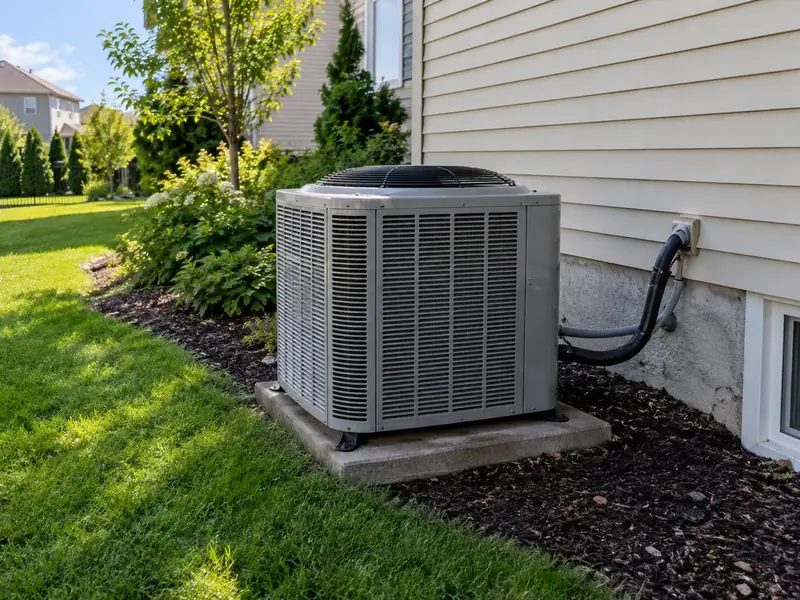
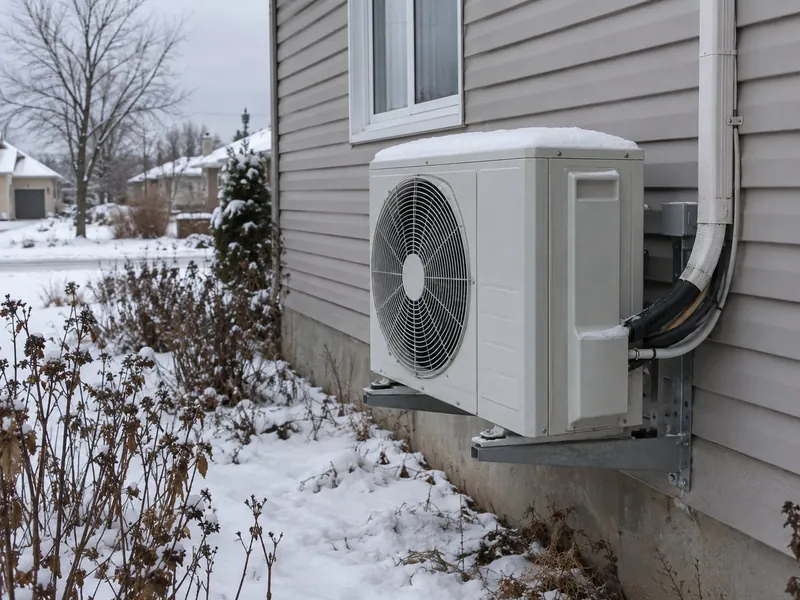
Snow is the Ottawa part. TSSA and Enbridge say exhaust vents often leave the side of a house as low as one foot above the ground, where a storm or a snowblower can bury them, and their 2022 joint release warns that blocked outlets let CO build up inside a home. It names furnaces, fireplaces and water heaters, and a high-efficiency furnace also exhausts through the wall. The release asks homeowners to keep snow from being shovelled, ploughed or blown up against a vent pipe.
The appliance check after an alarm
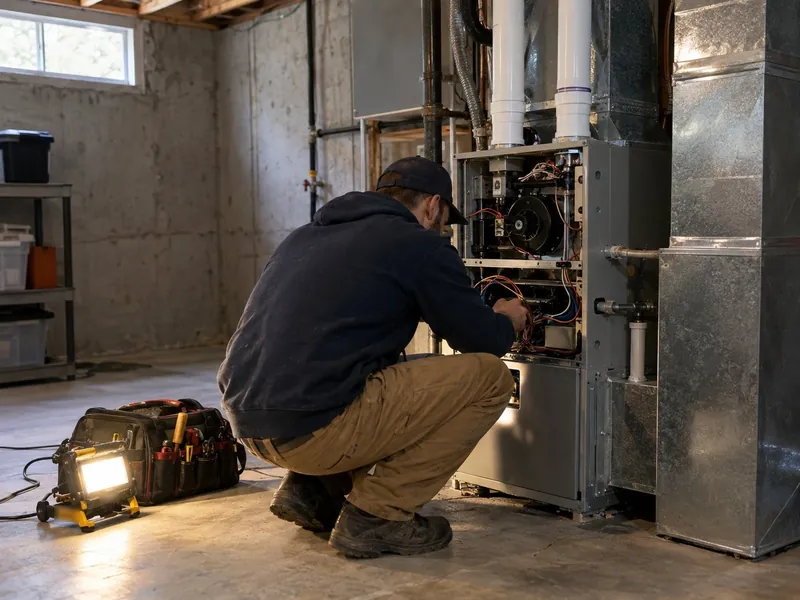
After the fire service clears the house, the source has to be found. TSSA’s guidance is that repairs to fuel-burning appliances go through a TSSA-registered fuels contractor, whose technicians must be certified, according to TSSA’s backgrounder. HomeStars says a tune-up includes a check of the heat exchanger; ask whether the visit also covers the venting and flue, and whether a combustion analysis is included.
On the Canada-wide HomeStars guide, a service call runs $80–$150 and a heat exchanger repair or replacement $500–$1,500+. HomeStars adds that most companies recommend a new furnace once a cracked heat exchanger is found, and that it should stay off. If a warning notice is already on the appliance, see the red tag page.
For prevention, Ontario advises a yearly inspection of fuel-burning appliances, chimneys and vents before the cold sets in. The annual furnace service page covers that visit.
Landlords and tenants
In a rental, Ontario puts the alarms on the landlord: install and maintain them, test them yearly, at each battery change, after electrical changes and at a new tenancy, and give the tenant the maintenance instructions. The tenant reports any fault. Ottawa Fire Services lists fireprevention@ottawa.ca and 613-580-2424 ext. 15376 for prevention questions.
What to put in your request
- what happened: a full alarm, a chirp or a display reading, with the date and time
- whether the fire service came, and what they said or measured
- the fuel-burning appliances in the house and their fuel
- the furnace’s age, and any notice left on an appliance
- where the vent pipes leave the house, and whether snow was near them
Who handles your request
Ottawa Heating Desk passes your request to one independent local heating company. That company calls you back, checks the appliances and prices any repair.
Questions people ask
Our house was built long before 2026. Does the every-storey rule apply?
Yes. Ontario’s information sheet says the updated requirements apply to all existing homes that have a fuel-burning appliance, a fireplace or an attached garage.
How many alarms does a bungalow need?
One on every level and one outside each sleeping area. The City of Ottawa’s guide notes that a bungalow with bedrooms at opposite ends, split by the kitchen or family room, needs two on that floor.
How often should a CO alarm be replaced?
Ontario says to follow the manufacturer’s instructions. The City of Ottawa’s release gives seven to ten years as the usual span, with a monthly test and a yearly battery change unless the battery is sealed.
Does a working alarm make the yearly furnace inspection unnecessary?
TSSA lists them as two separate steps: certified alarms that are tested, and a yearly inspection of every fuel-burning appliance. The alarm warns once CO is in the air; the inspection looks for the fault that would put it there.
Can the heating company install the alarms during its visit?
Ask when they call. Battery and plug-in units follow the maker’s instructions. Hardwired alarms connect to the house’s electrical system, so ask whether an electrician is needed; HomeStars lists Ottawa electricians at $100–$160 an hour.