In short
- An "A" safety violation means an immediate hazard: the gas to the appliance or the building is shut off at once.
- A "B" violation gives you up to 42 days to repair or replace before Enbridge Gas shuts the gas off, per Enbridge's Ontario page.
- Ontario's gas regulation bars using a tagged appliance: at once for an "A" notice, after the deadline for a "B" notice. Only a certificate holder may remove the notice.
- Enbridge Gas tells customers to hire a TSSA-registered heating contractor, who repairs the appliance and sends Enbridge the required information.
Typical prices in Ottawa
| Job | Typical range | Notes |
|---|---|---|
| Diagnostic or service call | $80–$150 | Canada-wide guide; often credited to the repair, so ask |
| Heat exchanger repair or replacement | $500–$1,500+ | Canada-wide repair guide |
| Heat exchanger replacement | $1,500–$2,500 | Canada-wide replacement guide |
| Furnace replacement, installed | $4,000–$7,500 | Canada-wide replacement guide |
| After-hours surcharge | $100–$200+ | Added to the base bill, Canada-wide guide |
| HVAC labour, hourly | $75–$150/h | Ottawa, average about $110 an hour |
Sources. Costs: HomeStars, Furnace Repair Cost, Canada-wide, seen 29.10.2026; HomeStars, Furnace Replacement Cost, Canada-wide, seen 29.10.2026; HomeStars, Heating and Cooling Costs in Ottawa, seen 29.10.2026. Tag types and deadlines: Enbridge Gas, Safety Violation (Ontario) and Enbridge Gas, Safety Violations for HVAC technicians, seen 29.10.2026. Law: O. Reg. 212/01, Gaseous Fuels, ss. 13–15, seen 29.10.2026; TSSA Director’s Order FS-072-06, natural draft boilers, seen 29.10.2026; TSSA, Find a Registered Fuels Contractor, seen 29.10.2026. Contracts: Ontario, rules for businesses entering contracts at consumers’ homes and Ontario, guide for home renovation businesses, seen 29.10.2026. Safety: Ontario, Carbon monoxide safety and Enbridge Gas, Smell gas?, seen 29.10.2026. Canada-wide figures are labelled; the company that calls you prices your own job.
The notice has a letter on it: A or B
“Red tag” is the trade name. Enbridge Gas calls it a safety violation. Ontario’s gas regulation, O. Reg. 212/01, calls the problem an unacceptable condition and splits it in two:
| “A” violation | “B” violation | |
|---|---|---|
| What it means | Immediate hazard | Unsafe, without an immediate hazard |
| Gas supply | Shut off at once, to the appliance or the building | Stays on until the deadline |
| Deadline | Use stops now | Up to 42 days on Enbridge’s page; the regulation caps a distributor’s notice at 90 days |
The letter, the date and the written condition on your notice set how fast the job is and what it can cost.
What Ontario’s rule asks of you
Once the notice is on, these duties sit with the owner or user:
- Use of the appliance ends. With an “A” notice, the regulation forbids using the appliance, or letting anyone use it, until the condition is corrected. With a “B” notice, the same ban starts when the deadline in the notice runs out.
- Leave the notice where it is. Only a person holding a certificate for that purpose may remove it, and that person sends it back to the distributor with their certificate number, name and address.
- Tell the distributor about the fix. For an immediate hazard, the owner or user must notify the distributor within 14 days of the correction. Enbridge runs an online tool where heating technicians submit clearances.
- Keep it maintained. Section 15 makes the owner or user keep gas equipment in safe operating condition.
If the house smells of gas, the order changes: Enbridge says to leave the area and call 1-866-763-5427 or 911 from a safe place.
Why furnaces get tagged
The regulation counts as unacceptable an alteration or deterioration likely to impair safe operation, or trouble with gas piping, venting of combustion products, combustion air or clearance from things that can burn. Use for an unapproved purpose, or failing the rules in force at installation, also qualifies.
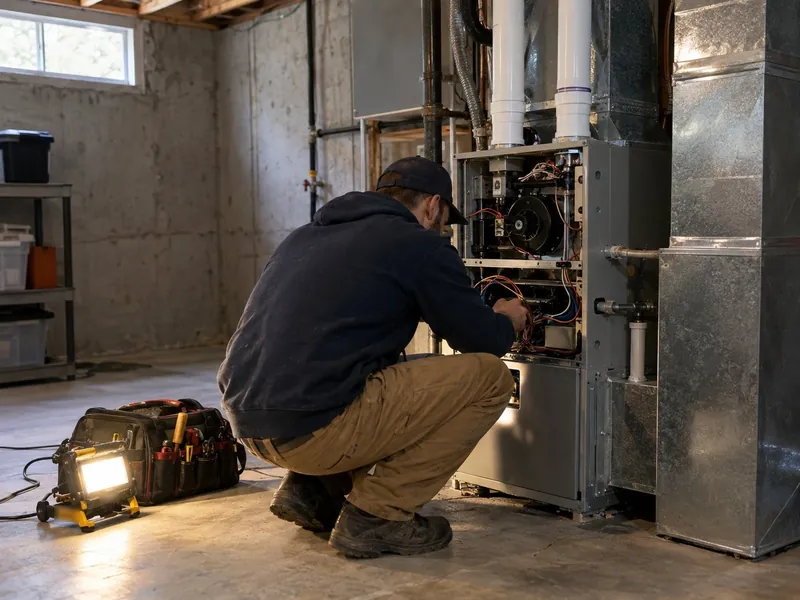
On a furnace, the written reason can be a cracked heat exchanger, a damaged vent, a combustion air problem or a leaking fitting. HomeStars’ repair guide says a furnace should not run with a cracked exchanger, because of the carbon monoxide risk. Our carbon monoxide page covers where Ontario requires CO alarms.
Hot-water boilers have their own rule. A TSSA Director’s Order has gas technicians in one- and two-family homes check natural draft boilers with a draft control device; a flue CO reading above 100 ppm that cleaning does not bring down means shut-off as an immediate hazard. See boiler repair.
Repair, replace, or ask for a second look
The written condition points to the job. Canada-wide HomeStars figures:
- Heat exchanger repair or replacement: $500–$1,500 or more on the repair guide; $1,500–$2,500 on the replacement guide.
- A cracked exchanger part alone: $500–$1,200. On a furnace over ten years old, the guide says the full repair typically approaches or exceeds a new furnace.
- A replacement furnace, installed: $4,000–$7,500.
In Ottawa, HVAC labour runs $75–$150 an hour, about $110 on average, per HomeStars’ Ottawa guide. On the same Canada-wide guide, an after-hours repair call adds $100–$200 or more.
A diagnosis you doubt can be checked. Enbridge tells customers to hire a TSSA-registered heating contractor, so a second registered company can look, confirm or question the condition, and quote. Check its registration with TSSA’s lookup first.
A new furnace offered during the same visit
Ontario limits selling furnaces and other HVAC equipment at your home. A business doing repairs or maintenance there cannot sign you to a new agreement for those products during that visit unless it already has a contract with you, asked in advance whether it could make an offer, and you agreed.
A replacement contract later needs a written agreement (any contract over $50), and when the contract includes an estimate, the bill can go at most 10% over it without a signed change. A contract signed at home carries a 10-day cooling-off period. For the full replacement process, see furnace replacement.
What to put in your request
A red-tag request is quicker to price when it carries the notice:
- The letter, A or B, and the deadline date on the notice.
- The condition as the technician wrote it, word for word, or a clear photo of the whole notice.
- Gas off to the furnace only or the whole house, and your other gas appliances.
- Furnace type and age, from the label if you can read it without opening a panel.
- The price you want: repair, replacement, or both side by side.
Who handles your request
Ottawa Heating Desk sends your request to one independent local heating company. That company calls you back, looks at the furnace and the notice, quotes the work and does it if you agree. Enbridge expects the contractor who repairs it to report the fix. Repair or replace is your call.
Questions people ask
What does a red tag on a furnace mean?
A gas technician or Enbridge Gas found the furnace in an unacceptable condition under Ontario’s gas regulation and attached a written notice. Enbridge calls it a safety violation. An “A” notice means an immediate hazard and the gas is shut off; a “B” notice means you have a deadline to fix it.
How long do I have to fix a B tag?
Enbridge Gas’s Ontario page says up to 42 days for repairs or replacement. The regulation caps the period in a distributor’s notice at 90 days. The date that counts is the one written on your notice.
Can I remove the tag myself once it is fixed?
Ontario’s regulation allows only a person holding a certificate for that purpose to remove it. That person signs it with their certificate number and sends it to the distributor.
Do I have to hire the company that red-tagged my furnace?
Enbridge Gas tells customers to hire a TSSA-registered heating contractor, who repairs the appliance and sends Enbridge the required information. TSSA’s website has a lookup to check registration.
Will Enbridge come back to check the repair?
For a “B” violation with no notice of repairs by the expiry date, Enbridge says it must visit to verify them, and a service charge may apply.