In short
- Ottawa's January nights average -14.3°C, and about 16 nights a year fall below -20°C (1991–2020 normals).
- NRCan puts the minimum operating temperature of newer air source models at -15°C to -25°C; Home Renovation Savings describes cold-climate units as designed for -30°C.
- In an NRCan test house in Ottawa, a cold-climate unit kept the house comfortable below -21°C at a COP above 1.5, with electric backup in place.
- The cold-climate label NRCan publishes asks for a COP of at least 1.75 at -15°C and 70% of the unit's +8°C heating capacity.
- Backup or supplemental heat adds $1,500–$4,000 on a Canada-wide guide.
Typical prices in Ottawa
| Job | Typical range | Notes |
|---|---|---|
| Cold-climate ducted heat pump with controls and outdoor setup | $9,000–$22,000 | One Ottawa firm’s published guide, typical 1,500 sq ft home |
| Air source heat pump, installed | $6,000–$12,000 | Canada-wide guide, all air source units |
| Backup or supplemental heat (dual-fuel or electric) | $1,500–$4,000 | Canada-wide guide, colder regions |
| Ductwork changes | $1,000–$5,000 | Canada-wide guide; when the ducts need it |
| Yearly heat pump maintenance | $150–$300 | One Ottawa firm’s published guide |
| Electricity, Time-of-Use, from 1 November 2026 | 9.1¢–18.9¢ per kWh | Ontario Energy Board, off-peak to on-peak; delivery is a separate bill line |
Sources. One Ottawa firm’s published guide, heat pump vs gas furnace, seen 29.10.2026. HomeStars, Heat Pump Installation Cost, Canada-wide, updated 21.08.2026, seen 29.10.2026. Ontario Energy Board, Electricity rates, prices from 1 November 2026, seen 29.10.2026. Performance and sizing: Natural Resources Canada, Heating and cooling with a heat pump, modified 24.12.2025, seen 29.10.2026; NRCan, CCHT cold-climate heat pump assessment, modified 16.01.2025, seen 29.10.2026; NRCan, Air-Source Heat Pump Sizing and Selection Guide, version 1.0, seen 29.10.2026; cold-climate label criteria, Version 6.1, published by NRCan, seen 29.10.2026. Climate: Wikipedia, Ottawa, climate section, citing 1991–2020 Canadian Climate Normals, seen 29.10.2026. Rebates: Home Renovation Savings, Heat pumps, seen 29.10.2026. Rules: ESA, homeowner inspection brochure and Ontario, guide for home renovation businesses, seen 29.10.2026.
What an Ottawa winter asks of the outdoor unit
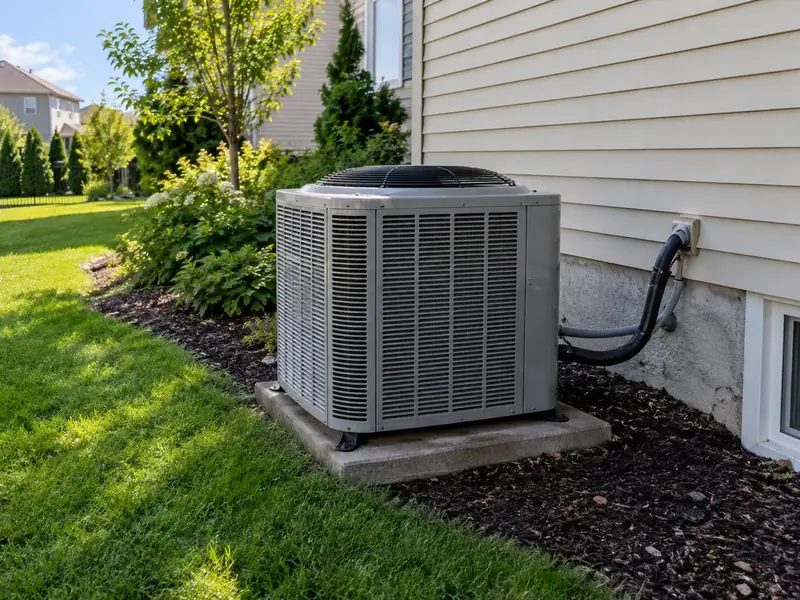
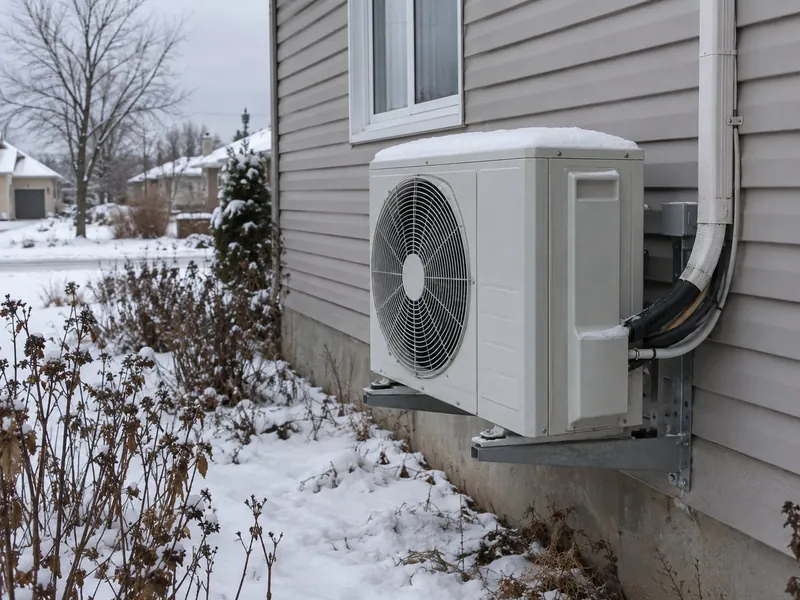
January is Ottawa’s coldest month, with an average low of -14.3°C on the 1991–2020 normals. About 16 nights a year drop below -20°C, and readings below -30°C come roughly once every two years. NRCan notes that air at -18°C still holds 85% of the heat it holds at 21°C, so a heat pump keeps working in the cold, with output and efficiency falling as the temperature drops. For an Ottawa house, the question is how much heat it gives on the coldest nights and what covers the rest.
What makes a unit cold-climate
NRCan describes cold-climate models as variable-capacity compressors paired with improved heat exchangers and controls that hold capacity in the cold and efficiency in mild weather. The cold-climate label criteria NRCan publishes set two numbers at -15°C: a COP of at least 1.75, and heating capacity of at least 70% of the unit’s capacity at +8°C.
NRCan quotes seasonal HSPF for Region V, a climate close to Ottawa’s, at 7.1 to 13.2, and advises comparing figures at -8.3°C when two units score alike.
Measured in Ottawa: the CCHT test house
The Canadian Centre for Housing Technology in Ottawa runs two identical, instrumented houses with simulated occupants. In spring 2012 it put a cold-climate heat pump in one, a house with a design heat loss of 12.14 kW at -25°C.
NRCan reports that the unit, with a sized electric backup, kept the house comfortable below -21°C. Its COP averaged 3.0 at +4.9°C and 1.5 at -21.1°C, where it gave about 6.55 kW. NRCan reads that COP as a sign the system was not relying on its 10 kW resistance heater alone. The unit dates from 2012, so ask for current maker data on the model you are quoted.
Four sizing goals, four amounts of backup
NRCan’s installer sizing guide starts from the owner’s goal:
- Cooling first. Sized on the cooling load; the existing heating carries most of the winter.
- Balanced. Sized at the top of the cooling range; it heats most of the shoulder season.
- Heating first. Sized on the heat loss at -8.3°C; backup takes the coldest spells.
- Full design load. Sized to the heat loss at the local design temperature, with little or no backup.
The last option may be out of reach on ducts built for a furnace, since the trunk limits airflow. NRCan adds that an oversized unit cycles in mild weather and an undersized one leaves the backup running more. In the guide’s example, a unit with a 2.2:1 turn-down ratio ran without cycling from -11°C to 1°C, one at 1.4:1 only from -7°C to -1°C.
Backup heat: electric, the furnace, or what is already there
NRCan names two kinds of backup. Electric elements in the ducts, or baseboards, can run together with the heat pump. A furnace or boiler takes turns with it, which is the hybrid setup. The sizing guide then sets how much backup is needed:
- a new furnace as backup should cover 100% of the design heat loss;
- new electric backup plus the heat pump should cover 100% together;
- a full heating system left in place serves as backup;
- a heat pump above the design heat loss needs none.
NRCan says an all-electric air source system normally needs 200-amp service. ESA requires hired electrical work to be done by a Licensed Electrical Contractor, and almost all of it needs a notification filed. Rooms the ducts never reached can take a ductless mini-split.
Running costs on the coldest days
NRCan puts air source COP at 2.0–5.4 at 8°C and 1.1–3.7 at -8°C. From 1 November 2026 the Ontario Energy Board’s Time-of-Use prices are 9.1¢ off-peak, 14.6¢ mid-peak and 18.9¢ on-peak per kWh. At the COP of 1.5 measured near -21°C, a kWh of heat costs about 6¢ off-peak on the electricity line; electric resistance costs the full 9.1¢. The gas comparison is on heat pump vs furnace.
What to put in your request
Give the house type, size and build year, the fuel it heats with now, whether it has ducts, the panel size, your sizing goal and the backup you want to keep.
The quote should list the model, its capacity at -15°C and lowest operating temperature from maker data, its NRCan listing, the backup type and kW, the cut-off setting, the circuit and ESA filing, and the total with HST. Ontario requires a written agreement over $50. Rebate steps are on the rebates page.
Who handles your request
Ottawa Heating Desk sends your request to one independent Ottawa heating and cooling company. That company calls you, looks at the house, prices the cold-climate setup and installs it.
Questions people ask
Will a cold-climate heat pump still heat the house at -30°C?
Home Renovation Savings describes cold-climate units as designed to work down to -30°C, and Ottawa sees readings below -30°C about once every two years. Output keeps falling as the air gets colder, so ask for the maker’s capacity figure at the lowest temperature it lists, and plan backup heat for the rest.
What happens to the heat during a defrost cycle?
NRCan explains that the unit reverses to send hot gas to the outdoor coil while the frost melts, and backup heat may run meanwhile. In the Ottawa test house, the electric backup heater warmed the cooler supply air during defrost.
Can my electric baseboards stay as the backup?
Yes. NRCan lists baseboards and duct heaters as all-electric backup that can run alongside the heat pump, and suggests setting them 2°C to 3°C below the heat pump’s set-point. Its sizing guide treats an existing full heating system as backup that needs no new equipment.
Is a ground source heat pump better in deep cold?
NRCan says the water entering a ground source unit usually stays above 0°C, for a COP around 3 in the coldest months, and savings about 10–20% above a cold-climate air source unit sized for most of the load. HomeStars puts ground source systems at $25,000–$50,000 Canada-wide.
How do I know the model counts for the rebate?
Home Renovation Savings requires an active model on NRCan’s qualified products list for cold-climate air source heat pumps, installed by a participating contractor who gets pre-approval first. Ask the installer to show the listing before you sign.